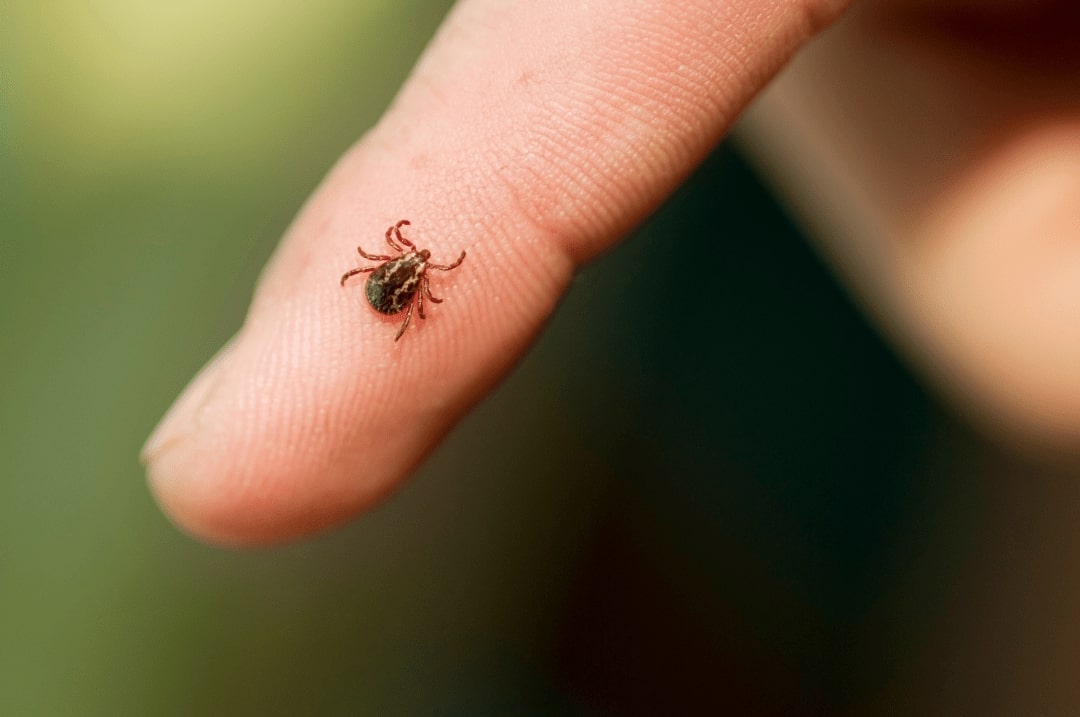
High Tick Populations in Fairfield & New Haven Counties
Ticks remain active from early spring through late fall, especially in shaded yards, wooded property borders, foundation plantings, leaf litter, tall grasses, and common backyard gathering areas. These environments provide the moisture, cover, and hosts that ticks rely on to survive and thrive throughout the season.
Ticks Can Spread Harmful Diseases
Fairfield and New Haven Counties are home to several disease-carrying ticks, including the Blacklegged (Deer) Tick, the American Dog Tick, and the Lone Star Tick. These species can transmit illnesses such as Lyme disease, anaplasmosis, babesiosis, and ehrlichiosis to both humans and pets. Because these ticks are active for much of the year and often go unnoticed, consistent tick control is essential for protecting your family and outdoor spaces.
Ticks Thrive in Typical Residential Landscapes
Because ticks prefer cool, shaded, and moist environments, they tend to settle in areas around the yard that offer natural protection. They frequently hide near retaining walls, foundation shrubs, wooded transitions, and the outdoor zones where children and pets play. These common landscape features create perfect micro-habitats for ticks to remain active and undetected.